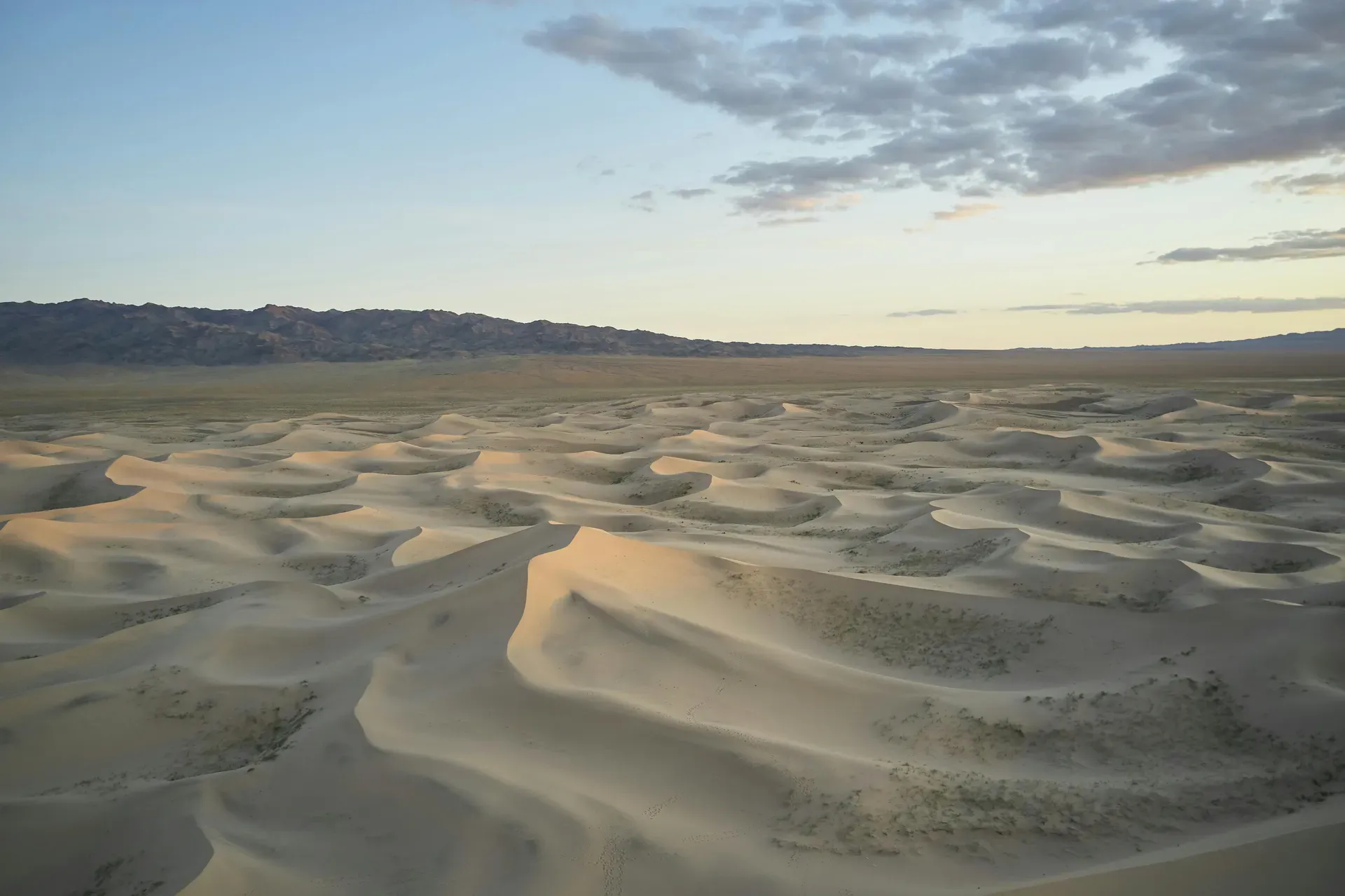
Private 4x4 vehicles depart Ulaanbaatar daily, covering 532 kilometers in eight hours to reach the Mongolian sands. Travelers entering through China take a 350 RMB high-speed train from Lanzhou directly to Dunhuang.
Southern Mongolia and Northern China
Hire a private 4x4 vehicle with a local driver to navigate the 532-kilometer route from Ulaanbaatar to the Mongolian Gobi. The daily rate covers both the driver and fuel. GPS fails frequently off-road, making an experienced local driver mandatory for reaching remote locations like the 300-meter dunes of Khongoryn Els or the red sandstone of the Flaming Cliffs. Roads often degrade into mere tire tracks that turn to deep mud after rare rain showers. Expect 3 to 6 hours of daily bumpy driving once inside the desert. Pack a scarf to protect your face from fine dust during sudden spring wind gusts.
MIAT and Hunnu Air operate 1.5-hour flights covering the 672 kilometers between Ulaanbaatar and Dalanzadgad (DLZ). This route bypasses the long overland drive entirely. Schedules operate seasonally and flights run on a limited basis, requiring advance booking months ahead of the June and July Naadam festivals. Dalanzadgad is the provincial center where travelers can pick up a cell signal before heading into the trackless desert. Arrange a 4x4 pickup at DLZ airport, as you cannot navigate the surrounding Gurvan Saikhan National Park without a local driver. Bring earplugs, as smaller domestic propeller planes generate significant cabin noise.
Daily public buses depart from Ulaanbaatar's Dragon Bus Station, making the 532-kilometer journey south to Dalanzadgad. The ride takes up to 10 hours across rugged, semi-arid steppe. Passengers can secure seats using the Tapatrip mobile app. The bus drops you in Dalanzadgad, meaning you still need to hire a private 4x4 vehicle and driver to access the actual desert sites or nearby ger camps. Carry at least 3 liters of bottled or boiled water for the long ride, as tap water is unsafe and dehydration remains a serious risk in the dry heat.
High-speed trains connect Lanzhou directly to Dunhuang across a 1,100-kilometer stretch of northwestern China. Dunhuang acts as the primary gateway to the Chinese side of the Gobi, including the Mingsha Mountain and Crescent Lake oasis. The five-hour rail journey costs 350 RMB. Foreign visitors boarding this train must hold a standard Chinese tourist visa, and drones require real-name registration before entering the region. From the Dunhuang station, taxis run the final 30-minute stretch to the Mogao Caves. Keep your passport accessible, as real-name registration and strict security checks occur at the station before boarding.
Dedicated parking lots and taxi drop-offs do not exist in the trackless Gobi. Hired 4x4 vehicles—costing 280,000 MNT per day with a driver—pull directly into unpaved ger camps. Wheelchair users require significant physical assistance transferring from these vehicles, as the rugged terrain entirely lacks paved paths and ramps.
| From | Mode | Time | Cost | Tip |
|---|---|---|---|---|
| Ulaanbaatar (Dragon Bus Station) | Public Bus | 9–10 hours | 35,000 MNT | Secure daily departure tickets to Dalanzadgad using the Tapatrip app. |
| Ulaanbaatar (UBN) | Domestic Flight | 1.5 hours | 450,000 MNT | MIAT and Hunnu Air run limited, seasonal schedules to Dalanzadgad. |
| Ulaanbaatar | Private 4x4 Vehicle | 7–8 hours | 280,000 MNT per day | Rates include a driver and fuel, required for navigating trackless routes to Khongoryn Els. |
| Lanzhou, China | High-Speed Train | 5 hours | 350 RMB | Trains connect to Dunhuang, the main entry point for the Chinese Gobi and Mogao Caves. |
Secure a 35,000 MNT bus ticket from Ulaanbaatar’s Dragon Bus Station to Dalanzadgad using the Tapatrip app. Daily departures cover the 532-kilometer route in nine to ten hours. This option saves over 400,000 MNT compared to seasonal 1.5-hour flights on MIAT or Hunnu Air.
Hire a local driver with a private 4x4 vehicle for 280,000 MNT per day. Standard GPS devices fail off-road, leaving self-drivers lost in trackless terrain with zero cell service. Dirt tracks often disintegrate into impassable mud after rare rain showers.
Obtain a special border permit before approaching within 30 kilometers of the Mongolia-China line. Travelers crossing to the Chinese side via Dunhuang require a standard tourist visa. Drone pilots face strict restrictions in these zones and must complete real-name registration to fly in China.
Schedule your trip between May and September to avoid fierce spring sandstorms that drop visibility to zero and halt transport. June and July align with the Naadam festival. Pack thermal layers regardless of your arrival month, as summer nights routinely plunge below freezing.
Charge all electronics before leaving Ulaanbaatar or Lanzhou and pack high-capacity power banks. Tourist ger camps rely on solar panels and generators, limiting 220V European-style plug access to a few evening hours. The dunes and valleys offer no electricity.
Buses depart daily from the Dragon Bus Station in Ulaanbaatar to Dalanzadgad. The 532-kilometer ride takes 9 to 10 hours and costs 35,000 MNT. Secure your seat in advance using the Tapatrip app.
MIAT and Hunnu Air operate 1.5-hour flights from Ulaanbaatar (UBN) to Dalanzadgad (DLZ). Tickets cost 450,000 MNT for the 672-kilometer route. Flight schedules remain strictly seasonal and run on limited frequencies.
Navigating the trackless desert without a local driver is dangerous. GPS signals frequently fail off-road, and unpaved tire tracks quickly turn into impassable mud after rare rain showers. Hire a private 4x4 vehicle with a driver for 280,000 MNT per day to reach deep areas like Khongoryn Els safely.
High-speed trains connect Lanzhou to Dunhuang in five hours. The 1,100-kilometer journey costs 350 RMB and drops you at the gateway to Mingsha Mountain and the Mogao Caves. Foreign travelers need a standard Chinese tourist visa to travel this route.
A specialized border permit is mandatory to enter the 30-kilometer zone along the Mongolia-China boundary. You must secure this document before attempting to visit restricted areas. Drones also face heavy restrictions in these zones and require real-name registration on the Chinese side.
Paved paths do not exist in the desert interior. Expect rugged, rocky terrain and 3 to 6 hours of daily off-road bouncing in an SUV. Wheelchair users require significant physical assistance for transfers at ger camps, as ramps are entirely absent.
Most visitors spend 4 to 9 days traversing the 1,295,000-square-kilometer region. Driving between highlights like the Bayanzag Flaming Cliffs and Yolyn Am gorge consumes large portions of daylight. Spring sandstorms between March and May regularly reduce visibility to zero, causing severe travel delays.
Browse verified tours with free cancellation and instant confirmation.
Find Tours